Hamza Khan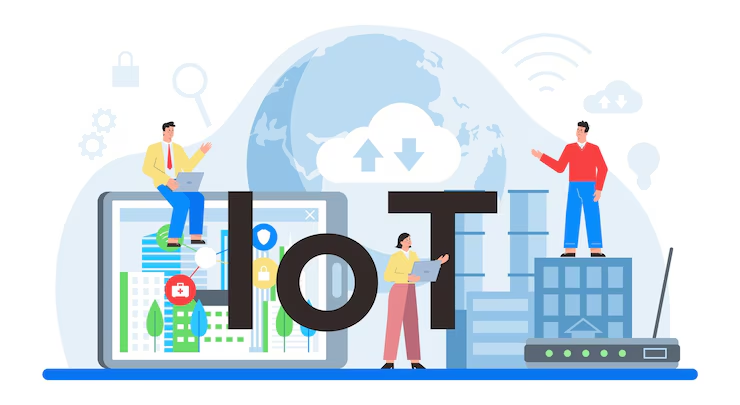
The Internet of Things (IoT) is no longer just a buzzword—it’s a transformative force that’s redefining how devices, systems, and people interact. With billions of devices already connected and more on the horizon, IoT is driving fundamental changes across industries and reshaping IT infrastructure at every level.
Whether enabling real-time decision-making or creating new business models, IoT solutions are central to the future of smart technologies.
The Rise of IoT: An Expanding Digital Ecosystem
In the past decade, we’ve seen an explosion in the number of connected devices. According to Statista, there will be more than 30 billion IoT devices by 2030. These range from smart home gadgets and fitness trackers to industrial machines and automated agricultural systems.
What’s powering this growth? Key enablers include:
- Advancements in wireless connectivity
- Reduced hardware costs
- Widespread cloud adoption
These developments create the foundation for a hyper-connected world where everything from homes to factories can be monitored and managed remotely.
Key Technologies Enabling IoT-Driven Transformation
Edge Computing
As IoT adoption grows, so does the need for real-time data processing. Edge computing reduces latency by processing data closer to the source—ideal for time-sensitive applications like autonomous vehicles or industrial automation. This shift demands a move from centralized data centers to distributed computing architectures.
Artificial Intelligence (AI) & Machine Learning (ML)
AI and ML are crucial for extracting value from the massive data generated by IoT devices. They enable:
- Predictive maintenance in manufacturing
- Real-time anomaly detection
- Automated decision-making
These intelligent systems help optimize operations and improve outcomes across sectors.
5G Connectivity
5G networks are a game changer for IoT. With high bandwidth, low latency, and massive device connectivity, 5G is key to unlocking use cases such as:
- Smart cities
- Remote surgeries
- Advanced robotics
IT infrastructure must evolve to support this leap, particularly in areas like bandwidth management and edge security.
IoT’s Implications for IT Infrastructure
1. Scalable Data Management
IoT generates vast amounts of structured and unstructured data. Traditional databases may struggle to keep up. Companies must adopt:
- Cloud-based platforms
- Data lakes for storage
- Stream processing for real-time insights
This shift requires IT teams to rethink how data is stored, accessed, and analyzed.
2. Security and Risk Mitigation
Each connected device increases the potential attack surface. Common vulnerabilities include outdated firmware, unsecured endpoints, and weak authentication protocols.
To stay protected, organizations must:
- Implement encryption and secure communication channels
- Use strong authentication methods
- Continuously monitor network activity
Device lifecycle management—from secure onboarding to decommissioning—is also critical.
3. Modern Network Infrastructure
IoT traffic can quickly overwhelm legacy network systems. To adapt, companies are turning to:
- Software-Defined Networking (SDN)
- Network Function Virtualization (NFV)
- Dynamic bandwidth allocation
These technologies allow networks to scale and adapt based on real-time demands.
4. Interoperability and Standardization
Fragmentation is a major barrier to IoT success. Without standard communication protocols, devices may fail to interact.
Organizations must advocate for and adopt:
- Open standards
- Unified frameworks
- Vendor-neutral platforms
This ensures that systems work together, regardless of the manufacturer or industry.
IoT Use Cases Across Key Industries
Healthcare
IoT enables remote patient monitoring, smart diagnostics, and real-time health data analysis. Wearable tech and connected medical devices help physicians intervene early and manage chronic conditions more effectively.
Manufacturing
Smart factories leverage IoT for predictive maintenance, supply chain visibility, and improved safety. Real-time monitoring ensures minimal downtime and streamlined operations.
Agriculture
Farmers use IoT tools like soil moisture sensors and weather stations to make informed decisions. These tools improve crop yields, reduce waste, and enable precision agriculture practices.
Smart Cities
IoT powers urban innovations including traffic management, energy optimization, and public safety monitoring. Cities can reduce resource waste and enhance quality of life for residents.
Preparing for the IoT-Driven Future
The rapid expansion of IoT is pushing IT infrastructure to evolve. To stay competitive and future-ready, businesses must:
- Invest in scalable cloud and edge solutions
- Strengthen cybersecurity protocols
- Upskill IT staff in data science and IoT architecture
- Foster partnerships with device and platform providers
Collaboration between stakeholders—technology vendors, regulators, and business leaders—is essential to build a secure, scalable, and interoperable IoT ecosystem.
Emerging IoT Trends to Watch
- Digital Twins: Simulate real-world systems using virtual replicas for predictive maintenance and planning.
- Blockchain Integration: Secure data exchanges between IoT devices with immutable ledgers.
- Sustainable IoT: Focus on energy-efficient hardware and eco-friendly applications.
- IoT-as-a-Service (IoTaaS): Make IoT accessible to small businesses via subscription-based models.
Conclusion: Embracing the IoT Revolution
IoT is reshaping industries and redefining IT infrastructure at a fundamental level. From predictive insights to real-time control, the potential is immense. But capitalizing on this opportunity requires more than technology—it demands strategy, investment, and vision.
Businesses that adapt quickly, invest in the right infrastructure, and embrace innovation will lead the way in this new era of connectivity. The future belongs to those who are ready to transform, evolve, and thrive in the world of IoT.
Related Post;The Impact of IoT on IT Infrastructure: Preparing for a Connected Future

 Mahmood Ahmad