Global Backlink Agency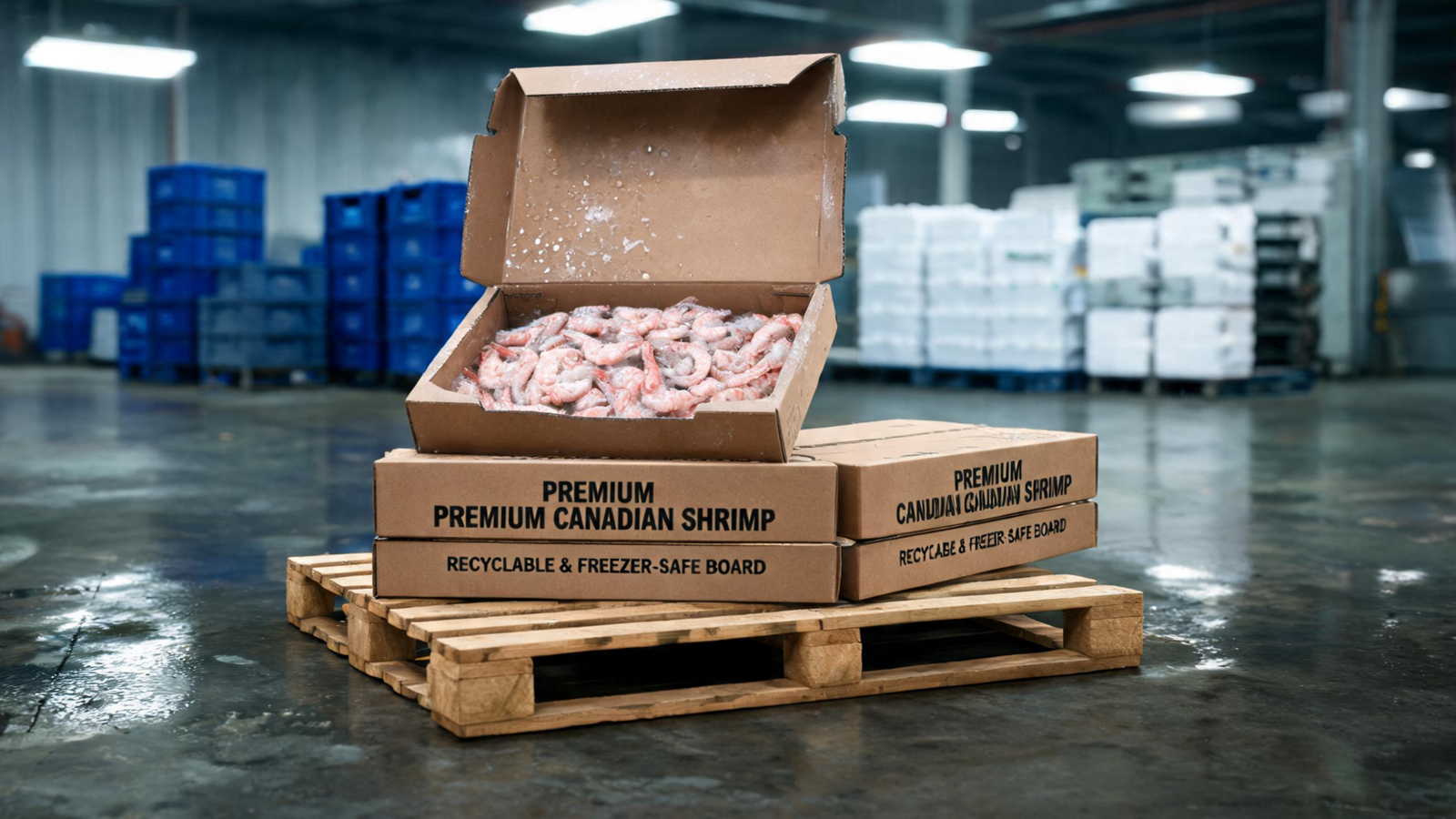
Commercial fisheries are moving away from rigid plastic totes and expanded polystyrene (EPS) cases because both formats create cost and waste problems. Plastic crates are heavy, occupy a full cube on return trips, and require washing, inspection, and reverse logistics. EPS is light but bulky. It also breaks under rough handling and creates loose fragments at docks and plants. Procurement teams now treat Shrimp Boxes as cold-chain equipment, not disposable shells. Heavy-duty corrugated and solid-board formats address those pressures. They arrive flat and are erected beside the packing line. Clean fibre can enter an approved recycling stream after delivery. This removes empty-return legs and reduces space reserved for rigid containers.
The change is not a simple material swap. A seafood box must withstand stacking, wet handling, ice melt, subzero storage, impacts, and export dwell time. Board grade, flute profile, compression strength, barrier, closure, and pallet pattern affect performance. A recyclable claim is valid only where local systems can repulp the used pack.
The global seafood packaging market report values the sector at USD 17.80 billion in 2024, estimates USD 19.70 billion for 2026, and forecasts USD 28.90 billion by 2033. That represents an increase of USD 11.10 billion, or 62.4%, from the 2024 baseline. The total market is projected to grow at a 5.6% compound annual rate, while paper and paperboard packaging is expected to grow at 6.5%. At that rate, a paperboard revenue index of 100 in 2025 would reach approximately 165.5 by 2033, equal to 65.5% cumulative growth. These figures support rising demand for custom cardboard boxes in Canada among seafood processors seeking recyclable, space-efficient packaging.
Thermal Performance and Freezing Efficiency
Freezing speed depends on heat transfer from the product to moving cold air. EPS slows that transfer because its cellular structure is an insulator. Poorly fitted rigid crates can leave voids around the inner bag. A dense, solid board uses thin, compact fiber layers. High-density corrugated designs use tighter flutes, controlled vents, and close-fitting dimensions. These features reduce dead air within the blast stream.
The reported gain is material. A solid board packaging freeze time study states that seafood freezes 35% faster than in fish or plastic crates. It also reports that flat-packed board permits 5 to 10 times more unassembled packaging volume on one pallet. That reduces inbound truck space and packaging storage near the processing line.
Specialized cardboard shrimp boxes should match the freezer, not just the product weight. Vents must align on the pallet. Excess vent area weakens compression strength. Too little restricts airflow. The inner bag should be folded tightly so it does not trap warm air. Custom food packaging can use right-sized footprints that reduce headspace and form stable pallet columns.
Processors should validate freeze-time claims in their own tunnel. Record product core temperature, blast-air temperature, air velocity, pack weight, pallet position, and time to the specified endpoint. A 35% benchmark does not replace a plant trial. Savings occur only when the full pallet reaches the validated core temperature.
Food Safety Standards and Moisture Barrier Science
Untreated paperboard loses compression strength as fibers absorb water. Seafood packs face meltwater, condensation, glaze, brine, and repeated temperature changes. The barrier system must stop liquid from reaching load-bearing fibers while keeping the pack safe for direct or indirect food contact.
Options include thin polyethylene (PE) coatings, removable PE bags, repulpable aqueous coatings, and wax-free bio-based barriers. PE provides water resistance and heat-sealable surfaces. A separate liner can contain ice-melted while leaving the case easier to recover. Aqueous performance varies with coat weight, fold cracking, dwell time, salt, and fat. Bio-based does not automatically mean recyclable or freezer-safe. Each structure needs test data.
The Canadian food inspection safety requirements are outcome-based. Food-contact materials must be suitable for their intended use, free of noxious constituents, and managed so they do not contaminate food. The rules do not mandate PE by name. When PE is selected, the processor should hold supplier declarations showing that the lining is non-toxic and controls chemical migration for the intended food, contact time, and temperature. At 0°C and through subzero storage, seals and folded corners must also prevent liquid leakage.
Certified cardboard food boxes support compliance only when the certificate matches the finished construction. Buyers should request food-contact declarations, migration records, lot traceability, barrier specifications, and change-control terms. They should test conditioned, filled cases for water absorption, wet compression, drop resistance, seal integrity, liner puncture, and pallet stability. Export programs need written acceptance limits.
Hygiene still depends on plant controls. Store blanks off the floor and away from splash zones. Keep liners covered. Separate packaging from raw-product waste. Inspect joints and seals during production. Record box and liner lots against finished-product lots. This makes defects traceable before a border rejection.
Supply Chain Economics and Environmental Compliance
Shrimp packaging wholesale contracts can lower unit prices, but total delivered cost matters more. Flat blanks reduce inbound cube. One-way fiber packs remove washing, crate-loss, rental, and return-freight charges. Standard footprints improve pallet loading. Printed handling marks reduce relabelling and picking errors.
Forming equipment, liner insertion, tape, cold-room labor, and rejected wet cases must enter the model. Compare cost per shipped kilogram, not per empty box. Include freight, storage, erection labor, freezing energy, damage, claims, disposal fees, and fiber revenue. Model a full season because catch volume and export lanes change the result.
Custom shrimp boxes add value when they remove waste from a defined operation. A box sized to a 5 kg or 20 kg pack can limit headspace. Reinforced corners can support higher stacking. Vent patterns can match blast-freezer airflow. Moisture barriers can be limited to the surfaces that need them. Custom print can carry lot codes, orientation marks, handling instructions, and destination data without extra labels.
Environmental reporting is becoming a commercial requirement in North American seafood trade. Plastic-reduction programs and buyer targets increasingly penalize hard-to-recover formats. Exporters should map destination rules, labeling claims, and recycling acceptance before approving a pack. The Canadian plastic packaging diversion statistics show why: packaging represented 43.8% of all plastic that leaked into the Canadian environment in 2021. That share is pushing processors, retailers, and logistics buyers toward paperboard containers and lower-plastic barrier systems.
Paperboard does not remove every impact. Fibre production, coatings, damaged product, and transport still create emissions. Buyers should verify recycled content, sourcing, pack weight, recovery instructions, and recycler acceptance. The best design uses the least material that passes wet-strength, food-safety, freezing, and distribution tests.
Strategic Packaging for Long-Term Value
The strongest business case combines production, freight, compliance, and recovery data. A dense board can shorten freezing cycles. Flat supply releases warehouse and truck capacity. Qualified liners control leakage and migration. Right-sized cases reduce damage and pallet instability. Fiber recovery and fewer freight movements can lower the carbon footprint.
Conversion should begin with one product, freezer profile, pack weight, and export lane. Establish current costs and failure rates. Trial the new case through packing, blast freezing, cold storage, container loading, and destination handling. Approve it only after core-temperature, compression, leakage, damage, and recycling results meet written limits.
Conclusion:
Replacing rigid plastic and EPS with recyclable paperboard is a measurable operating decision. Solid-board cases can reduce freezing time by 35%, while flat-packed formats can fit 5 to 10 times more unassembled packaging on each pallet. These gains can lower inbound freight, storage demand, compressor use, and return logistics costs. Demand for custom cardboard boxes in Canada is also rising as fisheries seek moisture-resistant formats for domestic and export cold chains. Food-grade liners help protect box strength, control leakage, and reduce contamination risks during subzero handling. Processors must still verify compression resistance, chemical migration, pallet stability, and local recycling acceptance before full conversion. The best packaging option delivers the lowest cost per shipped kilogram without increasing product damage or compliance risk.